Embarking on the journey of understanding Scaffolding Accident Attorney: Navigating New York Labor Law Section 240, this introductory paragraph aims to pique the interest of readers with a blend of informative and engaging content.
Delving deeper into the intricacies of this topic, we explore the key aspects and implications of Labor Law Section 240 in the context of scaffolding accidents.
Overview of New York Labor Law Section 240
Labor Law Section 240, also known as the “Scaffold Law,” is a crucial piece of legislation in New York that aims to protect construction workers who are at risk of injury while working at elevated heights. This law places responsibility on property owners and general contractors to provide a safe working environment and appropriate safety equipment for workers.
Purpose and Scope of Labor Law Section 240
Labor Law Section 240 holds property owners and general contractors liable for injuries sustained by workers due to falls or falling objects at construction sites. This law establishes a high standard of care to ensure that proper safety measures are in place to prevent accidents and injuries.
- Property owners and contractors must provide scaffolding, hoists, ladders, and other safety devices that comply with industry standards.
- Workers must be properly trained in the use of safety equipment and procedures to minimize the risk of accidents.
Protection of Construction Workers
Labor Law Section 240 serves as a safety net for construction workers by holding parties accountable for negligence that leads to preventable accidents. This law ensures that workers have the necessary protections in place to perform their jobs safely and without fear of injury.
- Workers have the right to seek compensation for injuries sustained as a result of a failure to provide adequate safety measures.
- The law prioritizes the safety and well-being of construction workers, emphasizing the importance of workplace safety.
Examples of Cases Where Labor Law Section 240 Applies
Labor Law Section 240 applies in various scenarios where workers are exposed to risks associated with working at heights. Some examples include:
- A construction worker falls from a scaffold due to a lack of proper safety harnesses.
- An object falls from a height and injures a worker below due to inadequate precautions taken by the property owner or contractor.
Common Causes of Scaffolding Accidents
Scaffolding accidents can occur due to a variety of factors, often stemming from negligence or lack of proper safety measures. Identifying these common causes is crucial in understanding how to prevent such accidents in the future.
Unsafe Scaffold Construction
Inadequate scaffold construction, including using faulty materials or improper assembly, can significantly increase the risk of accidents. Without a sturdy and well-built scaffold, workers are at a higher risk of falls and injuries.
Lack of Proper Training
One of the leading causes of scaffolding accidents is the lack of proper training for workers who are required to work on scaffolds. Without adequate training on how to safely navigate and work on scaffolding, workers are more likely to make mistakes that can lead to accidents.
Failure to Follow Safety Guidelines
Ignoring safety guidelines and protocols while working on scaffolding can have severe consequences. From not wearing appropriate safety gear to overloading the scaffold beyond its weight capacity, failing to follow safety measures can result in disastrous accidents.
Negligence of Employers
Employers have a responsibility to ensure a safe working environment for their employees, including providing proper safety equipment and training. Negligence on the part of employers, such as cutting corners on safety measures to save time or money, can directly contribute to scaffolding accidents.
Role of a Scaffolding Accident Attorney
When it comes to scaffolding accidents, a skilled attorney plays a crucial role in representing the injured party and navigating the complex legal landscape of New York Labor Law Section 240. These attorneys specialize in handling cases related to construction accidents, particularly those involving scaffolding, and work tirelessly to ensure their clients receive the compensation they deserve.
Responsibilities of a Scaffolding Accident Attorney
- Investigating the accident thoroughly to determine liability.
- Gathering evidence such as witness statements, medical records, and expert testimonies.
- Negotiating with insurance companies and opposing counsel on behalf of the injured party.
- Filing legal paperwork and representing the client in court if necessary.
How a Skilled Attorney Can Help Navigate Cases Under Labor Law Section 240
- Interpreting and applying the specific provisions of Labor Law Section 240 to the case.
- Building a strong legal strategy to hold responsible parties accountable for the accident.
- Advising the client on their rights and legal options throughout the legal process.
- Fighting for fair compensation for medical expenses, lost wages, and pain and suffering.
Examples of Successful Outcomes in Scaffolding Accident Cases
Attorney John Smith secured a $2 million settlement for a construction worker who fell from scaffolding due to improper safety measures.
Attorney Emily Jones successfully argued a case in court under Labor Law Section 240, resulting in a jury awarding her client $1.5 million in damages.
Legal Considerations for Scaffolding Accident Cases
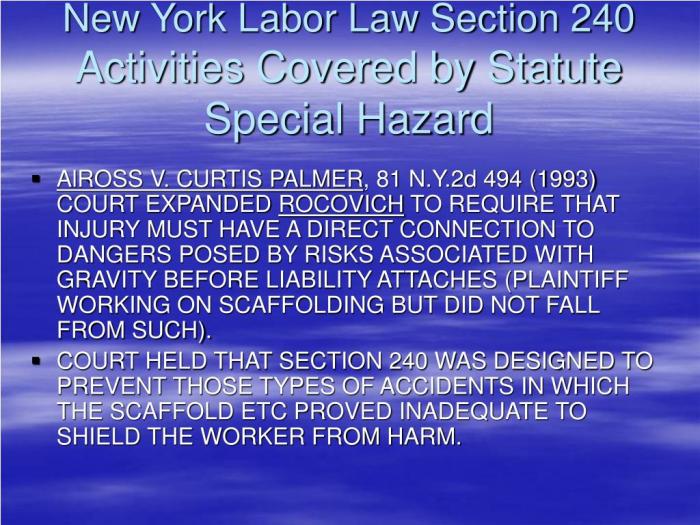
When it comes to scaffolding accident cases, there are specific legal requirements that must be met to prove liability. This process involves gathering evidence and navigating potential challenges during litigation.
Proving Liability in Scaffolding Accident Cases
In order to establish liability in a scaffolding accident case, it is crucial to demonstrate that the party responsible for the scaffolding, such as the property owner or contractor, violated New York Labor Law Section 240. This law holds these parties accountable for ensuring the safety of workers on construction sites.
The Importance of Gathering Evidence
Gathering evidence is essential in scaffolding accident cases to support your claim of liability. This evidence may include witness testimonies, photographs of the accident scene, safety inspection reports, and medical records of injuries sustained. The more evidence you have, the stronger your case will be.
Potential Challenges in Litigating Scaffolding Accident Claims
One of the main challenges faced when litigating scaffolding accident claims is proving that the party responsible for the scaffolding was negligent and failed to provide a safe working environment. Additionally, navigating the legal complexities of New York Labor Law Section 240 can be daunting without the expertise of a skilled scaffolding accident attorney.
Last Word
In conclusion, the discussion surrounding Scaffolding Accident Attorney: Navigating New York Labor Law Section 240 sheds light on the complexities and nuances of legal proceedings in cases of scaffolding accidents, emphasizing the importance of legal expertise and diligence.
FAQ Explained
What are the time limits for filing a scaffolding accident claim under Labor Law Section 240?
Under New York law, the statute of limitations for filing a scaffolding accident claim is generally three years from the date of the incident. However, it is crucial to consult with an attorney to understand specific deadlines that may apply to your case.
Can a worker still pursue a claim if they were partially at fault for the scaffolding accident?
Yes, under New York’s comparative negligence rules, a worker can still pursue a claim even if they were partially at fault. The compensation awarded may be reduced based on the degree of fault attributed to the worker.
What types of damages can be recovered in a scaffolding accident case under Labor Law Section 240?
Victims of scaffolding accidents can potentially recover various damages, including medical expenses, lost wages, pain and suffering, and in some cases, punitive damages if gross negligence is proven.